

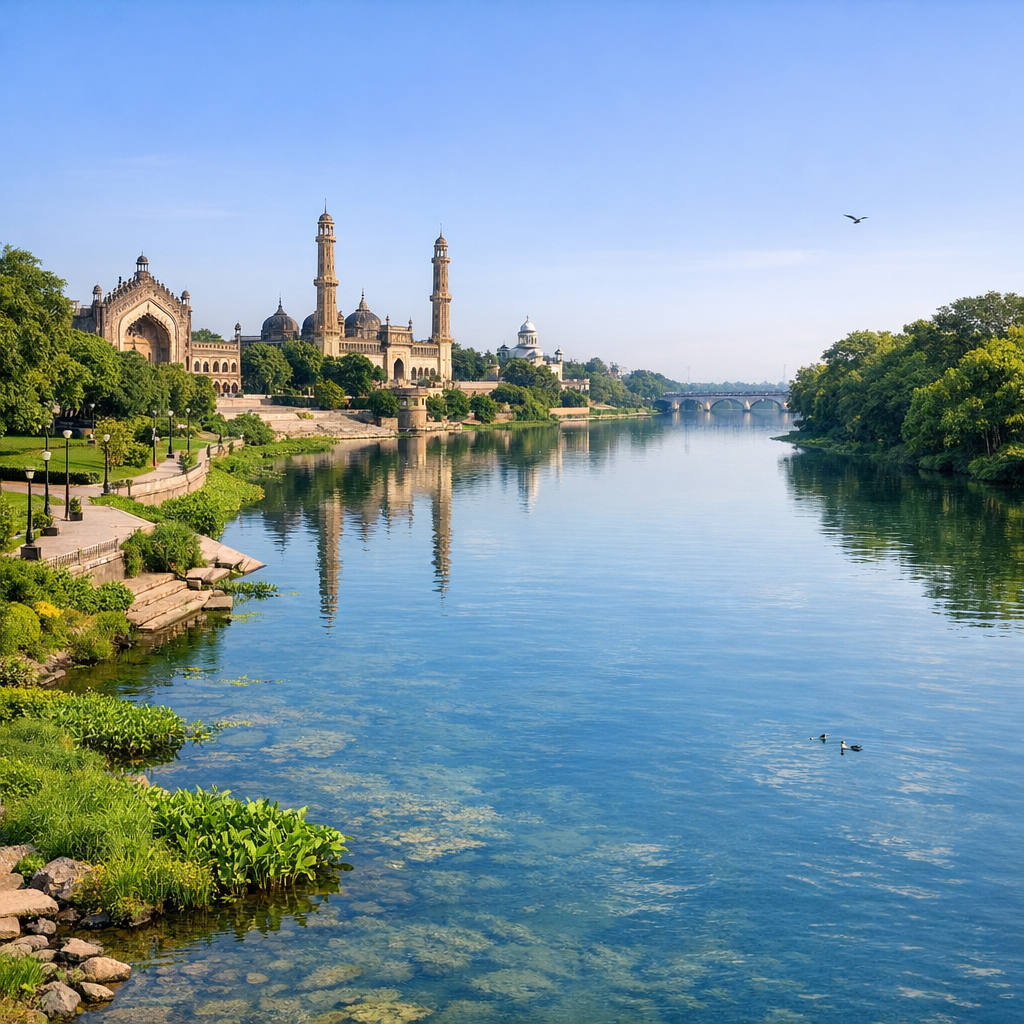
Lucknow, the capital of Uttar Pradesh, is making significant strides in environmental conservation and sustainable urban development. These initiatives aim to address the challenges posed by rapid urbanization and climate change.
Gomti River Conservation Efforts
The Gomti Task Force (GTF), established on January 1, 2025, has been instrumental in rejuvenating the Gomti River. Over the past year, the GTF has conducted regular riverbank patrols, pollution tracking, and systematic drain mapping. Their efforts have led to the removal of over 2,000 tonnes of floating waste and water hyacinth, significantly improving the river’s cleanliness and ecological health.
Advancements in Waste Management
In a major milestone, Lucknow has achieved 100% scientific processing of municipal solid waste under the Swachh Bharat Mission-Urban. The newly commissioned Shivari Solid Waste Management Plant, with a processing capacity of 700 metric tonnes per day, plays a pivotal role in this achievement. This development enhances public health and environmental quality in the city.
Urban Greening Projects
To enhance urban greenery and biodiversity, Lucknow is developing a 300-acre Gomti River Forest. This project aims to create new green zones, provide natural habitats for aquatic species and birds, and support nature-based tourism and recreation. Additionally, the city is set to establish its first biodiversity park in Gomti Nagar, covering 75 acres. This park will serve as a conservation site for rare and endangered plant species found in the Gomti River basin.
Corporate Contributions to Wildlife Conservation
Corporate entities are also contributing to environmental conservation. NTPC Northern Region Headquarters has signed a Memorandum of Agreement with the Nawab Wajid Ali Shah Zoological Garden to adopt four lions and three Royal Bengal Tigers. This initiative aims to improve animal care, nutrition, and habitat management, reflecting NTPC’s commitment to ecological balance and animal welfare.
Addressing Climate Change
Recognizing the challenges posed by climate change, the Uttar Pradesh government is focusing on developing heat-resilient urban infrastructure and sustainable cooling solutions. High-level consultations have been organized in partnership with the UN Environment Programme to formulate strategies that protect citizens from the growing impact of extreme heat.
These concerted efforts by the government, corporate sector, and community organizations underscore Lucknow’s commitment to environmental sustainability and resilience in the face of climate change.