

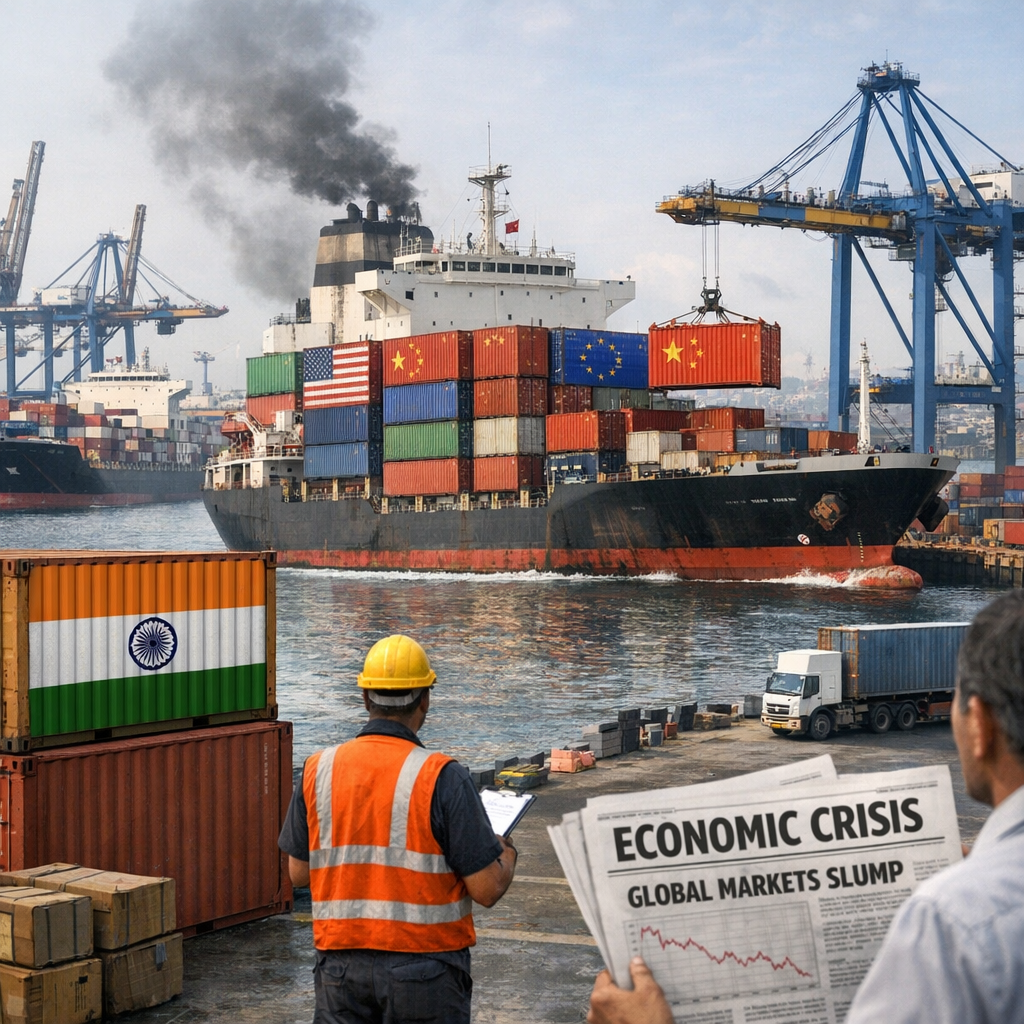
In an increasingly interconnected world, global events have profound implications for national economies. India, with its expansive trade networks and energy dependencies, is particularly susceptible to such external influences. Recent developments underscore the need for strategic recalibration to navigate these challenges effectively.
Geopolitical Tensions and Energy Security
The ongoing conflict in Iran has disrupted global oil supplies, leading to a surge in crude oil prices. Given that India imports approximately 85% of its crude oil, this escalation has intensified inflationary pressures and widened the fiscal deficit. The rupee has depreciated, and foreign exchange reserves have declined, compelling the Reserve Bank of India to intervene to stabilize the currency. These economic strains highlight the urgency for India to diversify its energy sources and invest in renewable energy to mitigate future vulnerabilities.
Trade Relations and Economic Diplomacy
The re-election of President Donald Trump in the United States has introduced new complexities in India-U.S. trade relations. The imposition of 50% tariffs on Indian goods, in response to India’s purchase of Russian crude oil, has strained bilateral ties. Additionally, the U.S. has increased outreach to Pakistan, further complicating regional dynamics. These developments necessitate a strategic reassessment of India’s trade policies and diplomatic engagements to safeguard economic interests.
Regional Instability and Economic Impacts
Political upheavals in neighboring countries, such as the removal of Sheikh Hasina in Bangladesh and the Gen Z protests in Nepal, have introduced uncertainties in regional trade and security. These instabilities can disrupt cross-border commerce and affect the livelihoods of communities dependent on these economic activities. Strengthening regional cooperation and fostering stable political environments are crucial for sustained economic growth.
Supply Chain Vulnerabilities
Global supply chain disruptions, exacerbated by geopolitical conflicts and the COVID-19 pandemic, have exposed India’s reliance on imports for critical sectors, including pharmaceuticals and technology. The scarcity of essential components has led to production delays and increased costs. To enhance economic resilience, India must invest in domestic manufacturing capabilities and diversify supply chain sources.
Conclusion
The confluence of global events presents both challenges and opportunities for India. By proactively addressing energy security, recalibrating trade relations, stabilizing regional partnerships, and strengthening domestic industries, India can navigate these turbulent times and emerge with a more robust and self-reliant economy.