

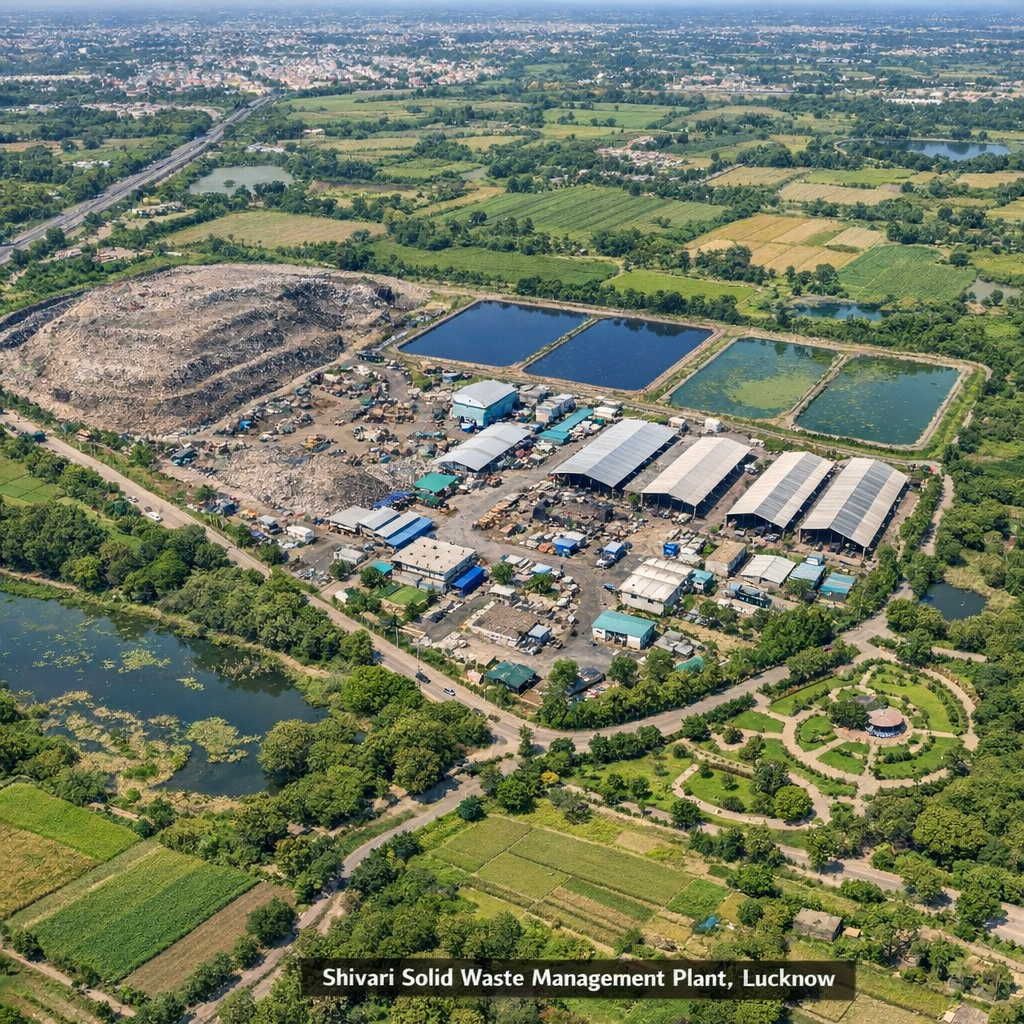
Lucknow, the capital of Uttar Pradesh, is making significant strides in environmental conservation and sustainability. The city’s initiatives in waste management, wetland preservation, and urban forestry are setting benchmarks for other urban centers.
Achieving Zero Fresh Waste Dumping
In a landmark achievement, Lucknow has become the first city in Uttar Pradesh to achieve 100% scientific processing of municipal solid waste under the Swachh Bharat Mission-Urban. The commissioning of the Shivari Solid Waste Management Plant, with a processing capacity of 700 metric tonnes per day, has been pivotal in this accomplishment. This development positions Lucknow as a zero fresh waste dump city, enhancing public health and environmental quality.
Revitalizing Urban Wetlands
The Gomti Task Force (GTF) has been instrumental in the conservation and rejuvenation of the Gomti River and its associated wetlands. Over the past year, the GTF has conducted extensive cleaning operations, removing over 2,000 tonnes of floating waste and water hyacinth, significantly improving the river’s ecological conditions. Additionally, the CG City Wetland, developed near the Ekana International Cricket Stadium, has emerged as an important eco-tourism site. The Lucknow Development Authority (LDA) is conducting comprehensive biodiversity mapping of this wetland to document and preserve its flora and fauna.
Urban Forestry and Green Spaces
In an ambitious move to enhance urban greenery, Lucknow is developing a 300-acre Gomti River Forest. This project aims to create a major green zone featuring nature trails and open spaces, providing a safe habitat for aquatic species and birds. The initiative is expected to support nature-based tourism, recreation, and environmental conservation, contributing to the city’s resilience against climate change.
Addressing Climate Change Challenges
Despite these positive developments, Lucknow faces challenges related to climate change. Over the past 16 years, the city has experienced a temperature increase of approximately 1°C, a significant variation in annual rainfall, and a surge in PM2.5 levels by 63.9%. These indicators highlight the need for continued and enhanced efforts in environmental conservation and sustainable urban planning.
Lucknow’s proactive approach to environmental sustainability serves as a model for other cities. Through comprehensive waste management, wetland conservation, and urban forestry initiatives, the city is paving the way towards a greener and more sustainable future.