

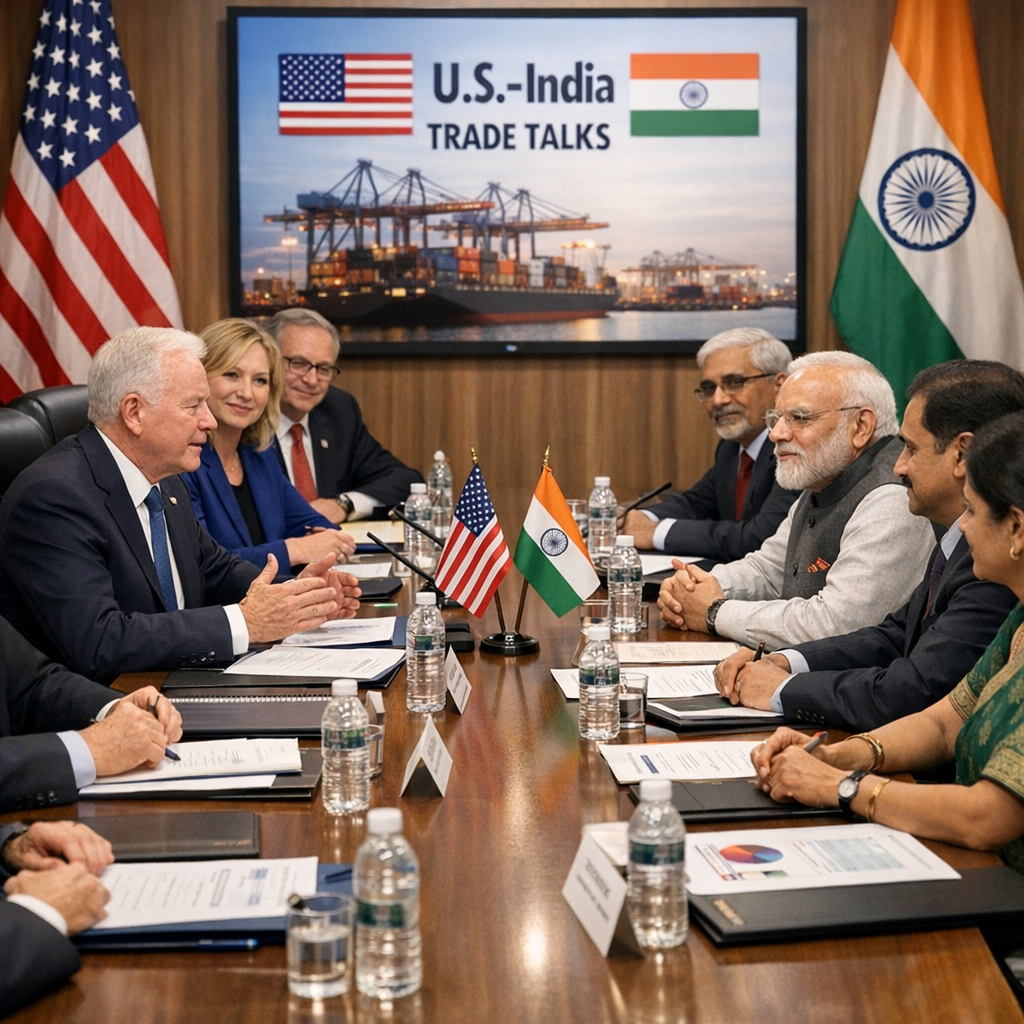
The relationship between the United States and India has undergone significant transformations over the decades, evolving into a multifaceted partnership that spans trade, defense, and economic cooperation. This article provides an overview of the current state and future prospects of U.S.-India relations, with a particular focus on trade dynamics and economic policies.
Historical Context
Since India’s independence in 1947, the U.S.-India relationship has experienced various phases, from Cold War-era tensions to a strategic partnership grounded in shared democratic values. Over the years, both nations have worked to strengthen ties across multiple sectors, including defense, technology, and education.
Trade Relations
Trade has been a cornerstone of the U.S.-India partnership. In recent years, the two countries have engaged in negotiations to address tariff structures and market access. Notably, a framework for an Interim Agreement was announced in February 2026, aiming to reduce tariffs and enhance bilateral trade. This agreement set a new tariff baseline, reducing the Liberation Day tariff of 25 percent to 18 percent. India agreed to eliminate or reduce tariffs on all U.S. industrial goods and a wide range of food and agricultural products, while the United States agreed to exempt certain products from reciprocal tariffs.
Defense and Strategic Cooperation
Defense collaboration has been a significant aspect of the bilateral relationship. Both nations have engaged in joint military exercises, defense technology transfers, and strategic dialogues to address regional and global security challenges. The shared concerns about Indo-Pacific security have further solidified this partnership.
Economic Policies and Their Impact
U.S. economic policies, including fiscal measures and trade tariffs, have implications for India. For instance, changes in U.S. monetary policy can influence capital flows and exchange rates, affecting India’s economic stability. Additionally, trade policies, such as tariffs on Indian exports, can impact sectors like electronics, pharmaceuticals, and textiles, potentially affecting India’s GDP growth and employment rates.
Challenges and Opportunities
While the U.S.-India relationship has seen substantial progress, challenges remain. Trade disputes, visa regulations, and differing stances on global issues can pose hurdles. However, both nations continue to seek avenues for cooperation, recognizing the mutual benefits of a strong partnership.
In conclusion, the U.S.-India relationship is dynamic and multifaceted, characterized by both challenges and opportunities. Continued dialogue and collaboration are essential to navigate the complexities of this partnership, ensuring mutual growth and stability.