

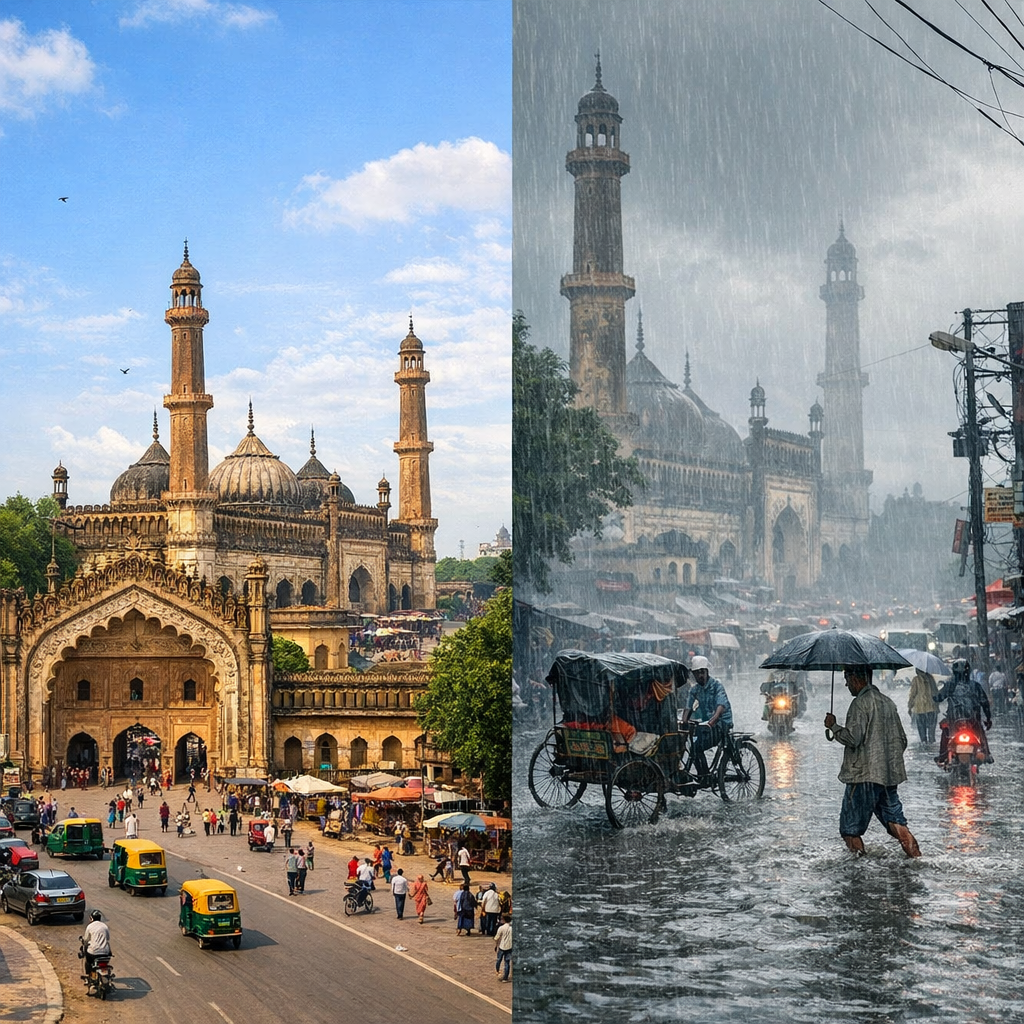
Lucknow, the capital city of Uttar Pradesh, experiences a humid subtropical climate characterized by three primary seasons: summer, monsoon, and winter. Each season brings its unique weather patterns and environmental challenges.
Summer (March to June)
Summers in Lucknow are intense and dry, with temperatures often exceeding 40°C (104°F) by May and June. This period is marked by the ‘Loo,’ a strong, dusty, and extremely hot wind that blows from the west during the afternoons, making outdoor activities challenging. Mornings start warm but dry, with heat peaking by mid-afternoon, often accompanied by hazy skies and low humidity around 20%. Nights provide only moderate relief as concrete structures retain heat.
Monsoon (July to September)
The arrival of the Southwest Monsoon in late June or early July brings a dramatic shift. While it offers respite from the summer heat, it introduces high humidity. Nearly 85% of Lucknow’s annual rainfall occurs during these months. The city turns lush and green, but the air becomes oppressive and muggy. Temperatures hover around 32-35°C (90-95°F), but the high moisture levels make the “real feel” much hotter. Rain typically comes in heavy, short-lived bursts or thunderstorms, often leading to temporary waterlogging in low-lying city areas.
Winter (November to February)
Winters are considered the most pleasant time in terms of temperature, though they come with unique atmospheric challenges. Daytime temperatures range from 20°C to 25°C (68-77°F), but nights can be quite cold, dropping to 5°C (41°F) or occasionally lower. From mid-December to late January, Lucknow frequently experiences dense radiation fog, often persisting well into the afternoon, causing a “cold day” condition where the lack of sunlight keeps daytime temperatures significantly below normal. Additionally, the combination of stagnant air and low wind speeds during this period can lead to a dip in air quality, creating a persistent winter haze.
Environmental Challenges
Lucknow’s rapid urbanization has led to the development of concrete structures and reduced green spaces, contributing to the Urban Heat Island (UHI) effect. This phenomenon results in higher temperatures in urban areas compared to their rural surroundings. The city’s location in the Indo-Gangetic Plain also makes it susceptible to extreme weather events, including heatwaves and cold spells. For instance, in January 2013, the city recorded temperatures near the freezing point, even dropping below 0°C on consecutive nights. Conversely, peak summer temperatures have historically touched 48°C (118°F) during severe heatwaves.
Understanding these seasonal patterns and environmental challenges is crucial for residents and policymakers to develop strategies that mitigate adverse effects and promote sustainable urban development.